Enrolling in a school is only the first step to ensuring your child is on a path to success. Parents and guardians are a child’s first teacher, and it is crucial that they remain an integral part of their child’s education journey.
Research shows that children whose families are engaged in their education – regardless of race or income – are more likely to:
- Read and do math on grade level
- Enjoy school
- Graduate from high school and college
- Have better social skills and classroom behavior
When parents get involved at school, they meet people that can share knowledge and connections. In turn, these parents are more likely to be able to support their children in succeeding. They access more resources and information.
How to Get Involved
There are many ways to be involved in your child’s education. Parent involvement doesn’t have to be just parent-teacher conferences.
Here are some things you can do to be more engaged:
- Read to and with your child: even 10 minutes a day can make a difference
- Communicate regularly with your child’s teacher: ask them how they prefer to communicate – whether in person, over text, or over an online portal – and check in with them regularly
- Participate in school events: Attending sporting events, concerts, and award shows – even those your child is not involved in– helps the school adopt a sense of community
- Join parent organizations at your school: Joining a Parent Teacher
- Association gives you a community of other parents who are passionate about making the school a better place
- Encourage a growth mindset: praise your child for effort, not just results, so your child understands that learning takes hard work
- Speak up for your child: understand what your school’s policies are on things like bullying, special education, or academic support. Talk to your child’s teacher or another school staff to find solutions when problems come up
Leveraging Resources and People
Parents and guardians are not expected to know everything about enrolling or advocating for their child. There are a ton of resources and people that can help you if you want to learn more or run into any issues.
To learn more about specific topics, check out these resources:
 Minnesota Standards Family Guides
These guides tell you the most important skills your student should be learning each year to be on track for Math and Reading, and how you can support them.
Absenteeism Guide
Learn about how your child’s attendance is crucial to their learning and development, and how you can support them to make sure they don’t miss school.
 Learning Heroes
A nationally recognized nonprofit, Learning Heroes works with partners to lift the experiences of families and educators. They have a host of tools, such as the Readiness Check, Go Beyond Grades, and Summer Parent-Teacher Planning Tool
Our Partners
Great MN Schools works with a number of local community organizations that are equipped to help you navigate the education system and advocate for your child.
Ayada Leads
Ayada Leads’ mission is to equip New Americans, particularly African Diaspora Women, to excel in leadership positions in their communities across the spectrum of societal influence.
Centro Tyrone Guzman
Centro Tyrone Guzman’s mission is to contribute to the well-being and full participation of Latines through education and family engagement.
Hennepin County Library
Hennepin County Library is a national leader of library service, innovation and excellence. 41 libraries, website and outreach services serve 1.2 million county residents over 611 square miles.
Lead the Way
Project Lead The Way empowers students to develop and apply in-demand, transportable skills by exploring real-world challenges.
Little Earth Residents Association
Little Earth provides entrepreneurship training, interpersonal connections, multi-level support, and education services to the American Indian community in South Minneapolis.
MN Zej Zog
MN Zej Zeg’s mission is to empower the Hmong community by nurturing the Hmong language, healing through the arts and wellness, and becoming more powerful through education across generations.
Northside Achievement Zone
The Northside Achievement Zone partners with organizations to walk side by side with low-income families as they put their children on a path to college.
PACER Center
The PACER Center improves educational opportunities and enhances the quality of life for children and young adults with disabilities and their families.
Parents In Community Action
Established in 1969, PICA has provided services to low-income families, pregnant women, infants, toddlers and preschoolers for more than 50 years. PICA helps change the economic trajectory of the families they work with by taking a two-generational approach.
Phyllis Wheatley Community Center
The Phyllis Wheatley Community Center works with low-income residents through core programs focused on early childhood education, youth development, and adult empowerment.
Pillsbury United Communities
Built with and for historically marginalized and underinvested groups across our community, their united system of programs, neighborhood centers, and social enterprises connects more than 55,000 individuals and their families each year.
Urban Ventures
Urban Ventures’ focus is to provide comprehensive, coordinated, cradle-to-career support for youth living in a 25-block core area of South Minneapolis, with the ultimate goal that all children will complete a post-secondary program and become leaders in their community.
Way to Grow
Way to Grow supports families with children from birth to age eight, empowering the next generation of leaders.
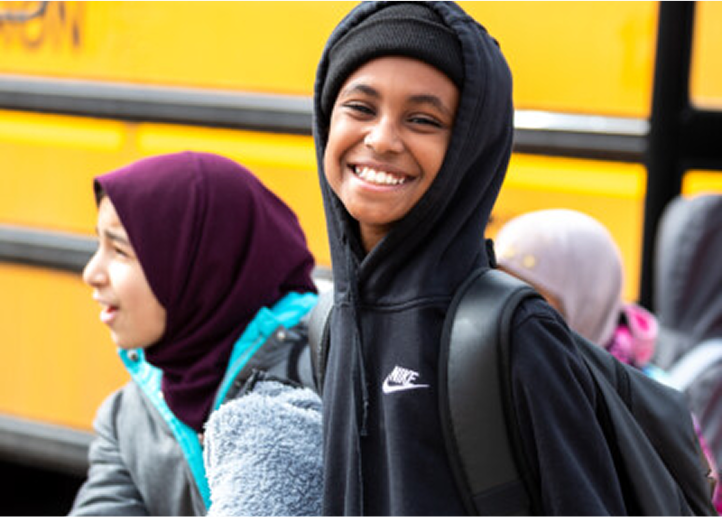
Set your student up for success
Use the Minneapolis School Finder to discover your best matches, or register for the Minneapolis K-12 School Finder Fair. Review the Minnesota Standard Family Guides to see if your student is on track for the next grade.
